Holding the Thread
Why I'm building InnerWeave, what it has to get right, and why a digital integration coaching tool should support the people doing this work, not replace them.

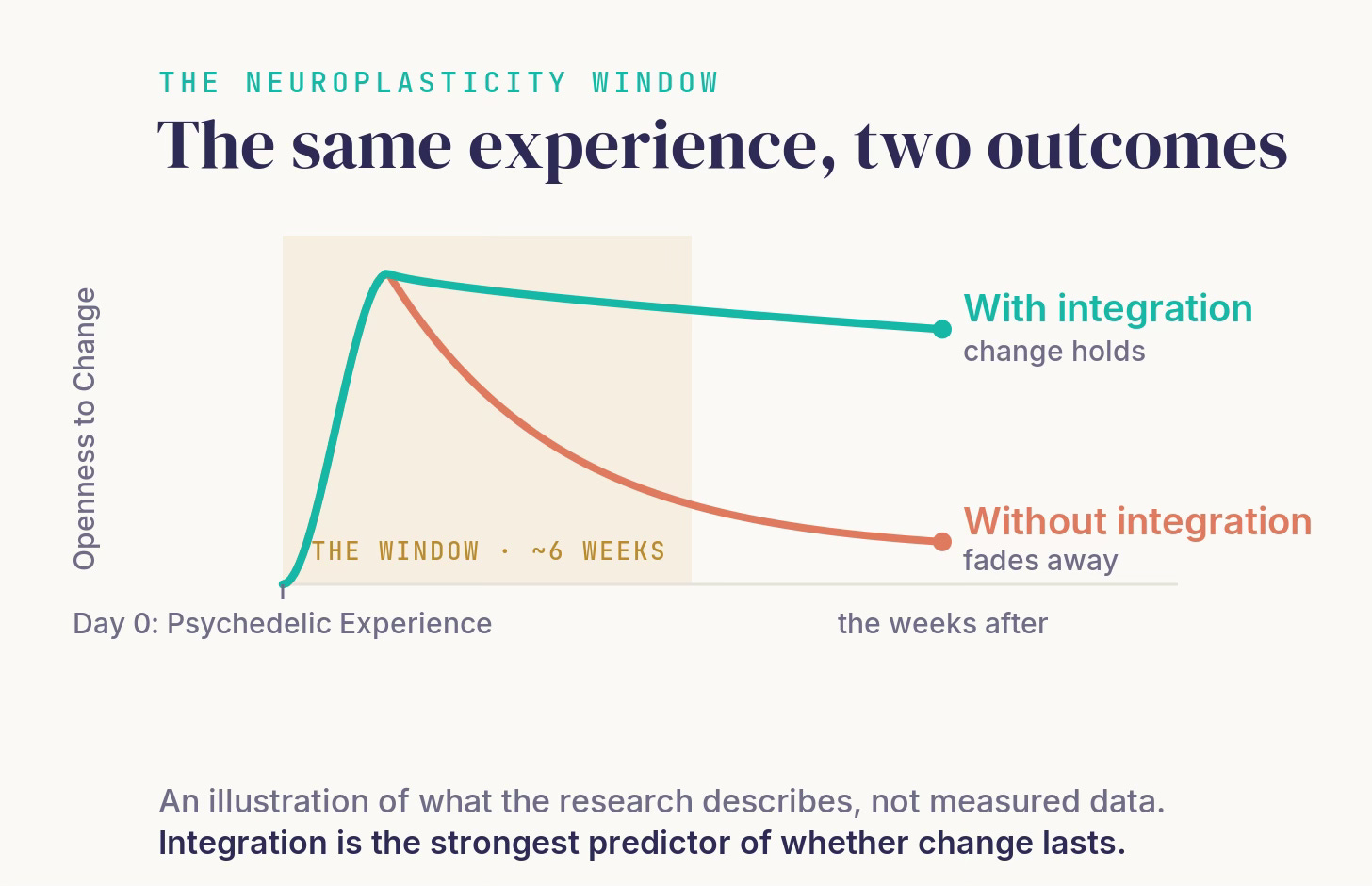
A few weeks ago I wrote about someone in r/TherapeuticKetamine who had finished a course of infusions, felt something significant shift, but then watched it fade without understanding why. I replied, as I often do, explaining the neuroplasticity window and suggested a few things they might try to help preserve those insights. They thanked me. And that, more or less, was that.
I have been answering posts like this for some time. They follow a familiar pattern: someone describes a psychedelic session that left them shaken, ecstatic, or confused, and then asks a version of the same question: “What do I do now?”. I reply whenever I happen to see it, they read it whenever they next open the app, and somewhere in that gap the moment they actually need support has usually passed. It is a slow form of help that doesn’t really work in the moment where it’s most needed. A stranger typing a reply into a box is not the same as having support to hand at two in the morning, when the thoughts arrive and there is nobody available to talk things through with.
Across seven essays I have described this gap from several angles. I’m not alone in this understanding. It’s a growing problem that the industry faces, and needs dedicated solutions in order for access to psychedelics to continue to grow and reach those who need them most. In this essay I’d like to introduce the integration tool I am building, and importantly, what such a tool has to get right before anyone should trust it with something as delicate as the weeks after a psychedelic experience.
• • •
How I ended up building an integration coaching app
I have written before about the longer route that brought me here, from molecular biology to facilitation, so I will not go over it again. The part that matters is a realisation that came to me during my own training. You spend time learning all about preparing a client through psychoeducation, dosing strategies, holding space during the session, managing challenging moments, and then helping the client reground once the effects subside. It is careful work, and the training takes it seriously.
What I found quite striking though, was how little training focussed on the post session period. The weeks that follow, which is where the evidence says most of the lasting change is won or lost, the person largely faces alone. Some manage to find their way to integrate their experience with some simple journaling or self-reflection, but many struggle to make sense of their experience and find ways to apply those learnings to help improve their lives. As a consequence, some end up on a forum at midnight asking strangers for help, often receiving multiple confusing perspectives, or at worst, outright dangerous advice being peddled in the absence of responsive moderators. So it was apparent that the gap was really about having a grounded, comprehensive support structure, available on demand during the weeks that follow, which can safely turn an experience into lasting change.
• • •
Why build a digital coaching tool, and not simply train more facilitators?
The obvious answer to a shortage of integration support is more coaches and facilitators. We need them, and nothing I am building is meant to replace a human doing this work. But consider the maths from the supply and demand piece I wrote recently: training to licensure costs somewhere between twelve and twenty-two thousand dollars and a year or more, for a profession whose economics remain uncertain. A skilled facilitator can hold only manage a handful of clients per week, because this type of work is intensive and cannot be rushed. And demand is about to climb steeply, as a synthetic psilocybin compound is in active FDA filing, an executive order in April directed the health agencies to accelerate access, and the VA has trials underway across nine facilities. Far more people will have these experiences over the coming years, and the human infrastructure to support them afterwards cannot scale at the same pace.
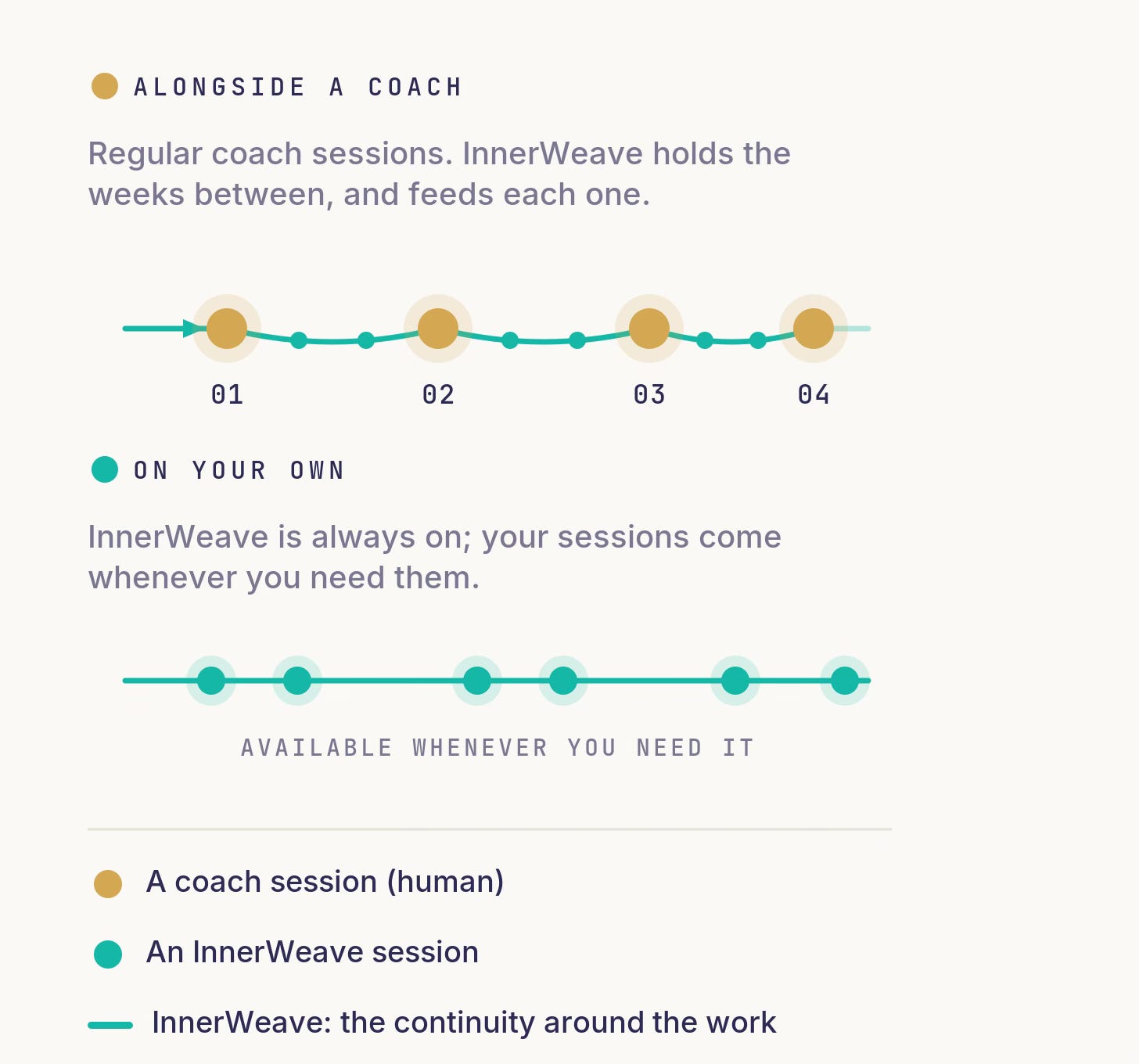
Inevitably there will be a shortfall in people who needed support during their window but could not find or afford it. That is the space a well designed digital coaching tool can occupy. Not the facilitated session, which should stay human, but the days in-between sessions and the months of slow unfolding where having a human coach on hand 24/7 is impossible. I think of it as augmentation, not replacement. A facilitator with a full caseload cannot respond to every client at any hour of the day. A tool can hold that continuity and extend a practitioner’s reach instead of competing with it. As the numbers climb, a digital layer running in parallel with the growth of coaches and training networks is not a threat to that growth, but something that can help it survive.
• • •
What a coaching tool has to get right
When building something this delicate, it’s essential to be honest about what it must do and what it must never pretend to be. Four things matter most:
1. It has to be unmistakably NOT a generic chatbot. Many people already use assistants like ChatGPT as informal integration guides, which is understandable because they are free, fluent in the topic, and available at any hour. But a general AI chatbot is built to be agreeable and to produce a plausible answer to anything, which is possibly the worst approach to this kind of work. They tend to affirm interpretations that should have been questioned, and they lack reliable safety protocols for managing conversations appropriately when they turn potentially dangerous. A tool for this has to be built against those defaults, not layered on top of them.
2. It has to be grounded in real facilitation practice. Not improvised warmth, but an integration methodology shaped by how trained facilitators work, drawing on the branches of psychology that have earned their place in it, from somatic to parts work to cognitive and transpersonal approaches, applied to what the person actually needs. In other words, it must be “tuned” to the phenomenological language expressed during psychedelic integration sessions and capable of meeting the client wherever they are in their integration process with a clear progressional direction. The point is that there is a real discipline beneath the conversation, not a friendly agreeable voice improvising.
3. It has to help you see the threads of your own integration. Persistent memory is no longer much of a differentiator. Chatbots can remember what you said last time, but what they don’t do is help you see how each session connects over time, and this is key to moving the integration needle. Persistent memory ties together themes that emerge gradually across separate sessions, building a thread that joins a dream surfaced in week one to a decision made in week six. Integration often unfolds over weeks and months, and having its ‘shape’ made clearly visible is something most people have never been offered.
4. It has to know its limits, and be rigorous where that matters most. This is not therapy, diagnosis, or a crisis line, and it does not hand you the meaning of your own experience, because imposing meaning is the one thing a facilitator is trained never to do. The one place I will accept no compromise is the detection of crisis situations. The tool has to be thorough at recognising when someone is moving beyond what a daily practice companion can support, which can be sometimes be ambiguous, and then pivot to being honest about its capabilities and directing that person to a human professional who can help.
This is InnerWeave.
• • •
What’s next?
It’s still early days and I am deep in the building, testing, iterating and improving. There’s a lot to get right, and that takes time. But if you are a facilitator or a trainee, if you have been through one of these experiences and found the afterwards harder than the journey, or if you are watching your own window begin to close and do not know what to do with it, then I would like to hear from you. I don’t pretend to have the answers for everything, and constructive advice is always welcome. The people this is for are the surest guide to whether it is any good.
I keep coming back to that person in r/TherapeuticKetamine. The advice they needed was not complicated, and I could give it, just not exactly when they were asking the questions. By the time they read my reply, the night they wrote it in was over. I cannot promise a tool that will always have the answers on tap. But it can be there at two in the morning. It can remember what you told it last week and show you how it connects to this week. And it can know when something turns more serious, to set itself aside and connect you with a trained human. My hope is that what I’m building will be much more safe and effective than relying on sporadic internet forums or undisciplined AI chatbots, and serve as a much needed bridge to span the integration gap.

I’m a trained psilocybin facilitator and integration coach based in Bangkok. I write about integration, harm reduction, and the science underneath the experience. I’m building InnerWeave, a coaching tool for the work that happens after a journey. The Weave publishes weekly; subscribe to follow along.
• • •
Further Reading
• Compass takes COMP360 psilocybin to the FDA after positive Phase 3 results — BioPharma Dive, 2026.
• Executive Order: Accelerating Medical Treatments for Serious Mental Illness — The White House, 18 April 2026.
• Nine VA Facilities to Open Research Trials for Psychedelics — Federal Practitioner, 2025.
• The Double Squeeze: the psychedelic integration supply and demand problem — The Weave (the supply-and-demand piece referenced above).
• The Two Nudges — The Weave.
Amazingly detailed, Kris!
This will be a winner 🥇